

- The day of the fight
-
Day of the fight Título Día de la lucha Ficha técnica Dirección Stanley Kubrick Producción Stanley Kubrick
Jay BonafieldGuion Robert Rein
Stanley KubrickMúsica Gerald Fried Sonido Gerald Fried Fotografía Alexander Singer
Stanley KubrickMontaje Julian Bergman
Stanley KubrickReparto Douglas Edwards
Walter Cartier
Vincent Cartier
Bobby James
Nat Fleischer
Stanley Kubrick
Alexander Singer
Judy CantorVer todos los créditos (IMDb) Datos y cifras País(es) Estados Unidos Año 1951 Género Documental-Fotográfico Duración 16 min. Idioma(s) Inglés Subtítulos en inglés Compañías Distribución RKO Radio Pictures Presupuesto $ 3900 Ficha en IMDb Day of the Fight (Día de la Lucha) es el primer cortometraje de temática fotográfico-documental dirigido por Stanley Kubrick, a sus veintidós años. Trata, en formato blanco y negro, sobre el boxeo y la figura del boxeador Walter Cartier.
Contenido
Argumento
El cortometraje, basado en el reportaje de Kubrick para la revista Look Magazine, muestra en un principio una variedad de imágenes de combates, espectadores y apuestas mientras cuenta una pequeña historia sobre el boxeo; a continuación se centra en el boxeador irlandés de peso medio Walter Cartier y su vida en un día normal de combate, esta vez contra su rival Bobby James. Su día comienza al despertar, a las seis de la mañana, en la cama con su hermano gemelo Vincent, ambos se arreglan y van andando a misa para rezar y tomar la comunión, después vuelven para desayunar con su perro y a continuación, se ve una revisión rutinaria en el médico para comprobar su estado físico, como almuerza un bistec para el aporte proteínico necesario para su trabajo, y su preparación en casa, relajándose con su perro y vistiéndose para ir al gimnasio. Ya en el gimnasio, se le ve poniéndose los guantes y calentando antes de que le llamen para ir a cuadrilátero, donde lucha hábilmente hasta dejar KO a su rival a las diez de la noche del 17 de abril de 1950.
Stanley Kubrick
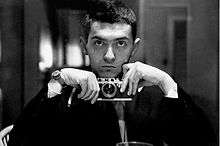

Nació en el barrio de Nueva York del Bronx, Estados unidos, en 1928 y fue un fotógrafo, director, guionista y productor de cine americano, considerado como uno de los más grandes cineastas del siglo XX. Aplicó sus conocimientos en fotografía, música, sobre todo jazz, y en ajedrez para planificar y convertir sus películas en obras de arte, entre las que destacan Espartaco (1960), 2001: Un odisea del espacio (1968), La naranja mecánica (1971) y Eyes Wide Shut (1999), entre otros trece grandes títulos más. Murió en 1995 en Harpenden en Hertfordshire, Reino Unido.
Personaje
Walter Cartier (1922- 1995) era un boxeador de ascendencia irlandesa que nació en el Bronx, Nueva York. Después de la guerra, comenzó en el boxeo fueron junto a su hermano gemelo Vincent Cartier, que posteriormente se convertiría en representante. Luego, fue pieza clave del documental Day of the Fight, de Stanley Kubrick y, a partir de ahí, volvió a hacer algunos cameos en películas como Marcado por el odio (1956) o El violinista en el tejado (1971) o en televisión como su papel más conocido en The Phil Silvers Show (1955).
Reparto
- Douglas Edwards como la Voz Narradora.
- Walter Cartier como sí mismo.
- Vincent Cartier como sí mismo (Gemelo y representante de Walter).
- Nat Fleischer como sí mismo (Historiador de Boxeo).
- Bobby James como sí mismo (Oponente).
- Stanley Kubrick como sí mismo.
- Alexander Singer como sí mismo.
- Judy Cantor como sí misma.
Curiosidades
- Alexander Singer y Stanley Kubrick rodaron la escena de la pelea con unas cámaras que solo permitían 100 pies de carrete, por lo que tenían que parar la grabación para recargar la cámara, coincidiendo la recarga de Kubrick con el Knock-out final de la pelea, que dejo a Walter como ganador. Por suerte, Singer si logró captar el final.
- Stanley Kubrick financió íntegramente de su bolsillo la película, con un coste de $ 3900, y la vendió por $ 4000, siendo la ganancia de unos simples $ 100. Se la vendió a la RKO Pictures que la utilizó en el estreno el 26 de Abril de 1951 como parte de la serie This is America.
- Este cortometraje rivaliza por la primera película de Stanley Kubrick con su otro cortometraje llamado Flying Padre (1951).
Enlaces externos
- http://kubrickfilms.warnerbros.com/
- Stanley Kubrick
- http://www.alohacriticon.com/elcriticon/article2918.html
- http://www.pagaelpato.com/cine/kubrick/kubrick.htm
- http://www.imdb.com/name/nm0000040/
- http://en.wikipedia.org/wiki/Day_of_the_Fight
- http://www.blogdecine.com/cortometrajes/day-of-the-fight-y-flying-padre-dos-cortos-de-stanley-kubrick
- http://www.vagos.es/showthread.php?t=289450
Véase también
Categorías:- Películas de Estados Unidos
- Películas de 1951
- Películas dirigidas por Stanley Kubrick
Wikimedia foundation. 2010.
